Helping women transform fatigue, mood swings, and hormone struggles into lasting balance and glow.

When Lab Testing May Actually be Helpful for PMS & PMDD
If you’ve been dealing with PMS or PMDD, you’ve probably wondered:
“Should I get hormone testing?”
And maybe you’ve even been told:
“Your labs are normal.”
“PMDD can’t be tested.”
“It’s just hormonal.”
Here’s the truth:
There is no single lab test that diagnoses PMS or PMDD.
PMDD is a clinical diagnosis, meaning it’s based on symptoms and how they change across the menstrual cycle.
But that doesn’t mean lab testing is useless.
From a functional medicine perspective, labs can be incredibly helpful - when used strategically - to uncover why your body is reacting so intensely to normal hormonal shifts.
Let’s break this down simply.
First: PMDD Is Not Caused by “Low” or “High” Hormones Alone
One of the biggest misconceptions about PMDD is that it’s simply a hormone imbalance.
In reality, PMDD is described as an increased sensitivity to normal hormonal shifts and can be driven by things like:
Impaired estrogen and progesterone metabolism and/or detoxification
Blood sugar instability
Inflammation
Gut and liver overload
Nervous system dysregulation
Nutrient deficiencies
This is where labs can provide context, not labels.
When Testing Can Be Helpful for PMS & PMDD
1. When You’ve Tried “All the Basics” and Still Feel Stuck
If you’ve already:
Improved nutrition
Balanced blood sugar
Reduced caffeine/alcohol
Focused on sleep and stress
…but symptoms persist, testing can help answer why your body isn’t responding.
2. To Understand Estrogen Metabolism (Not Just Estrogen Levels)
For many women with PMDD, the issue isn’t “too much estrogen” — it’s how estrogen is being processed and cleared.
Testing can help assess:
Estrogen detox pathways
Whether estrogen is being converted into more inflammatory forms
Liver and gut support needs
This is especially helpful if you have:
Heavy or painful periods
Breast tenderness
Migraines
Acne or skin flares
Worsening symptoms in the luteal phase
3. When Progesterone Support Isn’t Working as Expected
Progesterone is often suggested for PMS and PMDD — but it doesn’t work the same way for everyone.
Testing may help clarify:
Whether progesterone is actually low
If estrogen is overpowering progesterone
Whether cortisol or stress hormones are interfering with progesterone signaling
This matters because adding progesterone without addressing metabolism, stress, or inflammation can sometimes worsen symptoms.
4. To Identify Nutrient Deficiencies That Impact Mood & Hormones
Certain nutrients are essential for hormone clearance and nervous system stability, including:
Magnesium
B vitamins
Zinc
Iron (when appropriate)
Vitamin D
Testing can be helpful when there are signs of:
Fatigue and burnout
Mood instability
Poor stress tolerance
Worsening PMS despite “doing everything right”
5. When Histamine or Inflammation May Be Involved
Many PMDD symptoms overlap with:
Histamine intolerance
Chronic inflammation
Gut permeability
When Testing May Not Be the First Step
Testing isn’t always necessary right away.
It may not be helpful if:
You’re early in your healing journey
Your foundations (nutrition, blood sugar, sleep, stress) aren’t supported yet
You’re hoping for a single “answer” or diagnosis
Labs are being run without proper cycle timing or interpretation
In these cases, testing can create more confusion, anxiety, or unnecessary supplementation.
A Brief Look at Lab Testing for PMS & PMDD
When testing is appropriate, the goal isn’t to run all the labs — it’s to look for patterns that explain why symptoms intensify during certain phases of the cycle.
Some of the most helpful categories of testing for PMS and PMDD include:
Sex hormone patterns – looking at how estrogen and progesterone interact across the cycle, especially in the luteal phase.
Estrogen metabolism – to understand how efficiently estrogen is being broken down and cleared.
Stress Hormones & Cortisol Patterns – chronic stress can blunt progesterone and intensify mood symptoms.
Thyroid function (often overlooked in PMDD) – subtle thyroid imbalances can worsen fatigue, mood changes, and cycle symptoms.
Blood sugar and metabolic markers – unstable blood sugar often amplifies anxiety, irritability, and energy crashes before the period.
Key nutrient status – nutrients like iron and vitamin D that support mood, energy, and hormone & neurotransmitter function
Inflammation and gut health markers – because inflammation and poor estrogen clearance can worsen PMDD symptoms.
Testing is most helpful when it’s symptom-driven, timed correctly within the cycle, and interpreted through a functional lens — not used as a stand-alone solution.
For many women, labs are a refinement tool, not the first step.
The Bottom Line
Testing can be a powerful tool for PMS and PMDD — but it’s not about finding a single broken hormone or chasing perfect lab results. The most meaningful progress comes from understanding patterns, supporting how your body responds to hormonal shifts, and addressing the foundations that influence mood, energy, and resilience throughout the cycle. When used intentionally, lab testing can refine the healing process and bring clarity — but your symptoms already tell an important story, with or without labs. Healing PMDD is about supporting the whole system, not fixing one number.
Want a practical guide on how to eat to support your luteal phase?
Grab your copy below
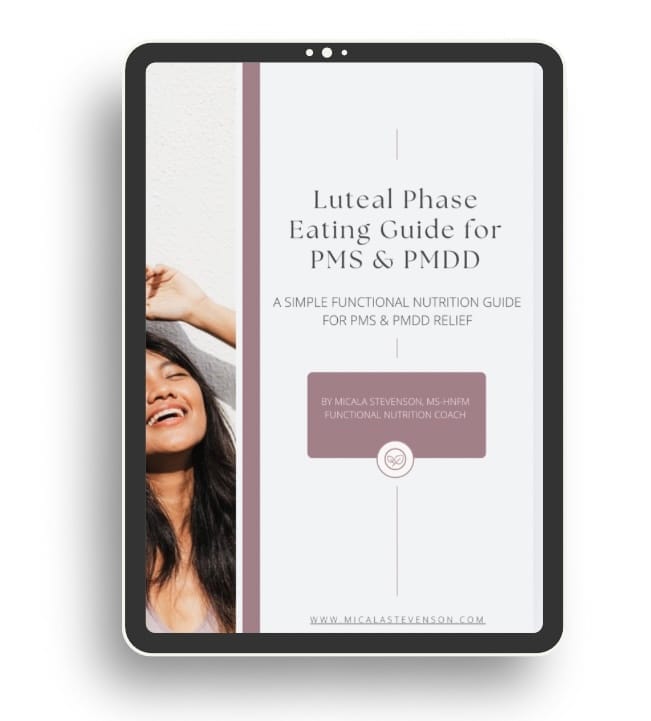
Low-Effort Luteal Phase Eating Guide (for PMS and PMDD Relief)
Your email address is safe with us .We never share your information with anyone
Let us know what you think in the comments!
YOU MIGHT ALSO LIKE
Want Access to My Online Supplement Dispensary?
Click below to receive discounts and special offers on all your favorite brands.

© 2025 Micala Stevenson. All Rights Reserved